The OcttoApps platform
Leads, follow-ups, meetings and reporting in one system, used every day on OcttoApps' own enquiries before it is offered to clients.
See the productSoftware built around how your business actually works.
We develop custom software and CRM systems in Doha, Qatar, bringing clients, teams, tasks, documents, workflows and reporting into one platform.
Start a Project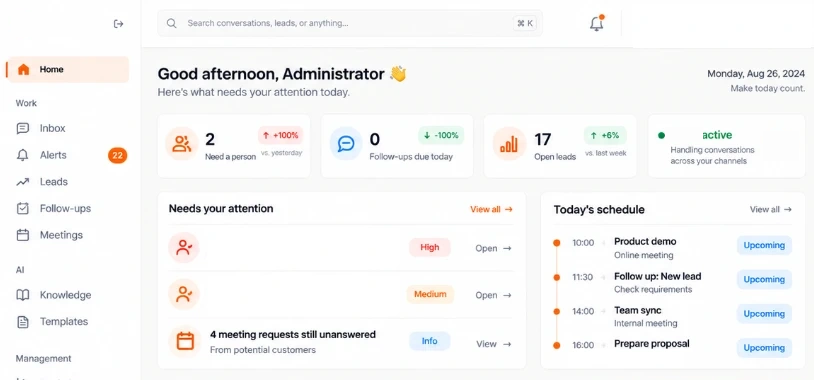
Every client, contact and conversation in one record.
Leads from your website, WhatsApp and campaigns, with stages and next actions.
Jobs, orders, bookings and deliveries tracked from request to completion.
Work assigned, tracked and moved through the steps your process actually has.
Contracts, quotes and files stored against the client or job they belong to.
Revenue, workload and progress, visible without asking anyone for a report.
Each person sees and edits only what their role allows.
Promises to clients scheduled, assigned and chased before they are missed.
Connected to WhatsApp, email, payment providers and the tools you already use.
Bilingual screens, records and communication for teams and clients.
Reports built around the questions you actually ask, exportable when you need them.
Users, settings, templates and data managed by your own team.
Leads, follow-ups, meetings and reporting in one system, used every day on OcttoApps' own enquiries before it is offered to clients.
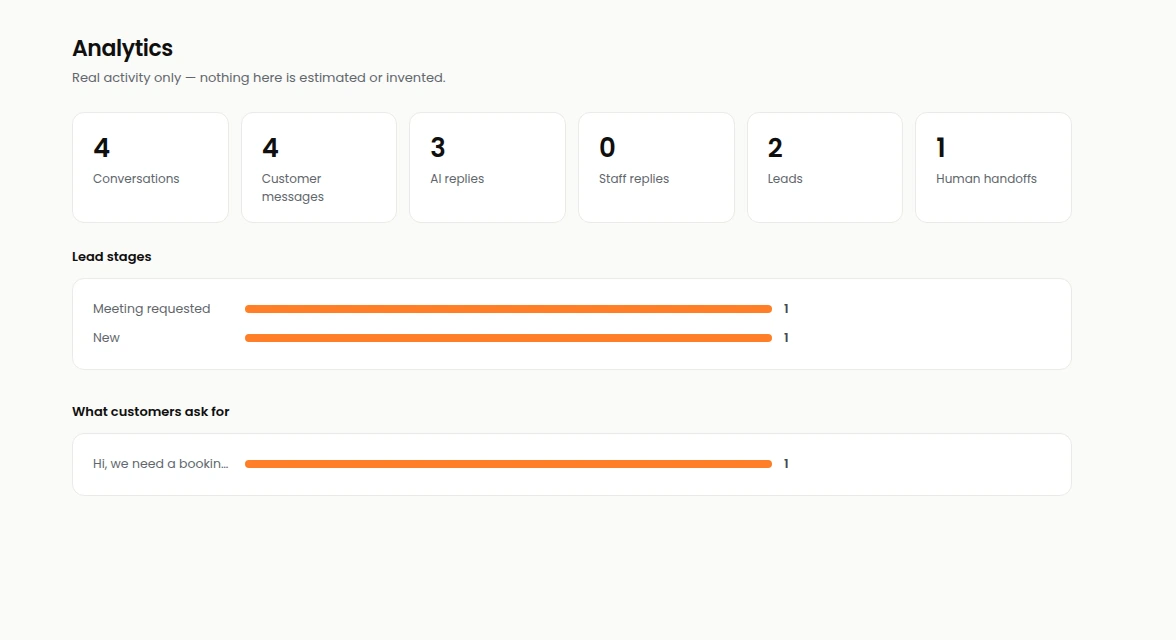
See the productConversations, replies, lead stages and what customers ask for, counted from the record rather than estimated.
View case studyWe map how an enquiry becomes a customer, how work is assigned and what managers need to see. That defines the records, permissions, approval steps and reports the system needs, instead of reproducing a spreadsheet on a screen.
A website, mobile app and admin dashboard should use consistent records. We can scope API integrations and data migration alongside the CRM, with agreed rules for importing, validating and managing existing information.
When your project needs more than a CRM, we can scope connected modules for staff records, operational workflows, document handling and management reporting. The required accounting, payroll or external-system integration is reviewed before the scope is agreed.
A request can involve a customer, a provider, an appointment and several staff actions. Our vehicle services case study shows how provider dashboards and operations tools support the customer journey. Octto Assistant is another example: the conversation, lead record, follow-up and meeting sit within a connected workflow. These examples help define which records and actions your own system needs.
Define who can view, create, edit, approve and export each type of record. Then describe the decisions a report must support: an overdue follow-up, an unassigned request or a change in job status. Those examples become measurable acceptance criteria for the delivered software.
A CRM focuses on customer and lead relationships. Custom business software can cover a broader process, such as bookings, jobs, approvals, staff work and reporting. Your system may combine both depending on the business needs.
Yes. We review how enquiries should be captured, assigned and followed up, then scope the integrations and provider requirements. The goal is a consistent customer record and a clear handover to your team.
Yes. We define user roles and the records or actions each role should access. Permissions and approval steps are part of the agreed system design.
We can assess the available data and propose a migration process. The scope should cover field mapping, data cleaning, validation, test imports and the final handover.
Approval stages can be included in the agreed workflow. We identify who submits a record, who reviews it, what information each role sees and what happens when a request is approved, rejected or returned for changes.
Reports can be built around the fields and events the system records. Before development, define how each measure is calculated, its date range, the relevant status and which users may access or export it.
The quotation should identify hosting, messaging, payment, email and other provider charges separately from development. Existing licences and the requirements of connected products are reviewed when the integration scope is agreed.