
Mobile App Development Qatar for Business Growth
How Qatar businesses can connect bookings, payments and customer updates in a mobile app that supports everyday operations.
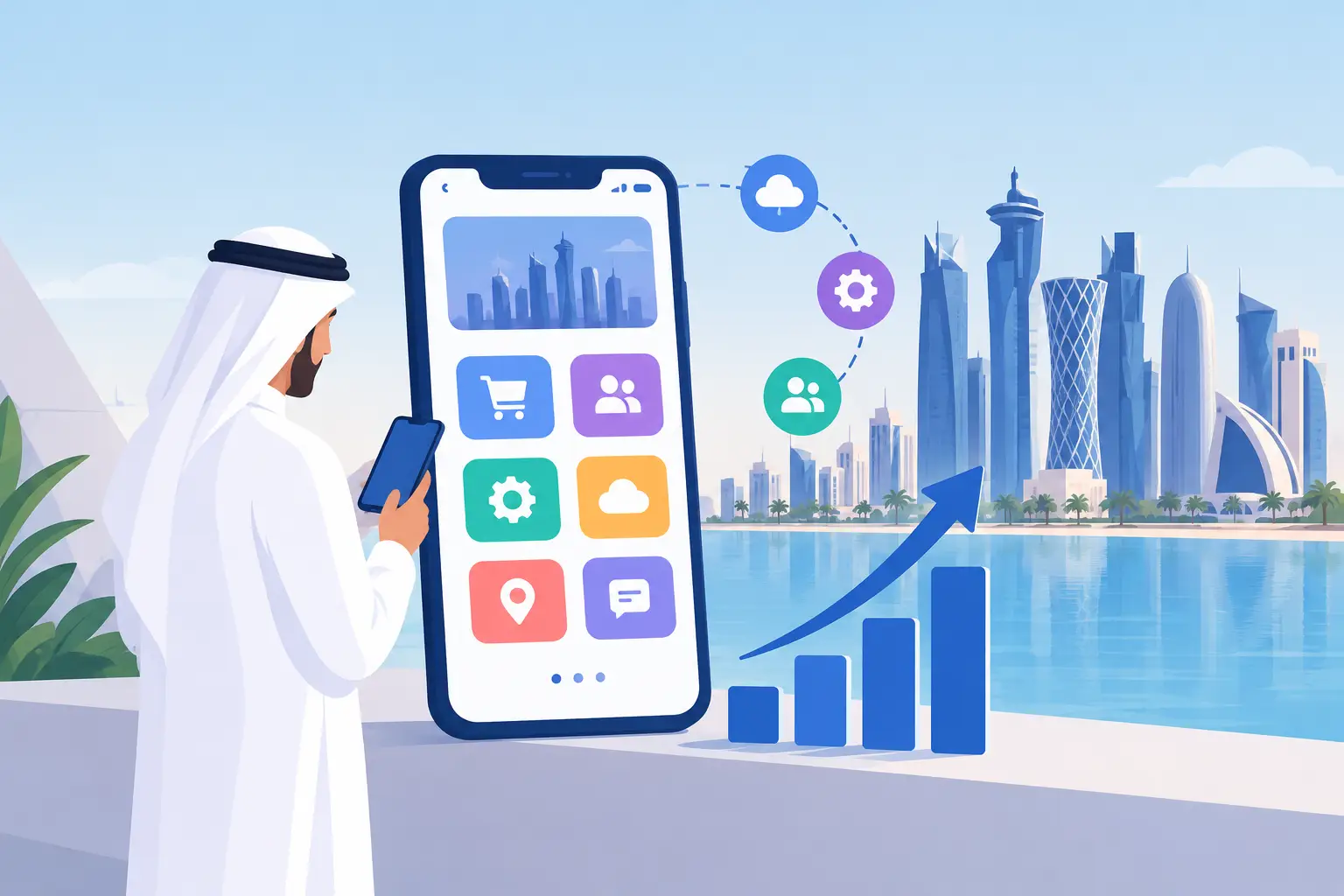
A customer who can book a service, pay, receive updates, and return without repeating their details is more likely to stay with your business. That is the practical value of mobile app development Qatar businesses are seeking: not an app simply because competitors have one, but a better way to manage customer relationships and everyday operations.
For many organizations in Doha, the opportunity starts with a familiar problem. Enquiries arrive through WhatsApp, calls, social media, and walk-ins. Customer details sit across spreadsheets and separate systems. Teams chase updates manually, while customers wait for confirmation. A well-planned mobile app can bring these moments into a more organized experience - provided it is connected to the way the business actually works.
What a Business App Should Solve
A useful mobile app begins with a specific commercial or operational purpose. For a vehicle-service business, that might mean service booking, vehicle records, estimates, and reminders. For a home-care provider, it may mean appointment scheduling, care updates, staff coordination, and payment history. A retailer may need loyalty features, product ordering, delivery status, and targeted offers.
The customer-facing app is only one part of the product. If your team must copy every booking into another system, manually check stock, or answer status questions one by one, the app has not solved the full problem. The strongest projects connect the mobile experience to an internal dashboard, customer records, payment tools, notifications, and the workflows used by staff each day.
This is why the initial question should not be, “What features should our app have?” A better question is, “Which customer and team actions should become easier, faster, or more reliable?” The answer shapes the product scope, budget, and technical approach.
Mobile App Development Qatar Needs to Reflect Local Use
Qatar-based businesses often serve customers who expect to move comfortably between Arabic and English. Translation alone is not enough. Arabic right-to-left layouts need to be designed deliberately, from navigation and form fields to button placement, number formats, and content hierarchy. An app that feels natural in English but awkward in Arabic creates friction at the point where trust matters most.
Local expectations also affect how an app handles communication. WhatsApp remains central to sales and service for many businesses. Rather than treating it as a separate channel, a business can connect WhatsApp conversations to lead records, appointment follow-ups, support workflows, and staff notifications. This reduces the risk of enquiries being missed or left without a clear owner.
Payment options, delivery areas, working hours, and approval processes should also reflect the business model in Qatar. A marketplace, legal-services provider, hospitality group, and recruitment platform will not require the same customer journey. Copying a generic app template usually creates features that look complete but do little to improve the real process.
Choose the Right App Scope Before Building
Not every business needs a large, feature-heavy application at launch. Starting with the core journey often produces a better result than trying to include every future idea in version one. For example, a service booking app may begin with account creation, available time slots, booking confirmation, payment, and reminders. Later releases can add memberships, referrals, in-app chat, or personalized recommendations once there is enough user feedback.
The right scope depends on the frequency and value of customer interaction. If customers use your service once a year, a mobile-friendly website and strong WhatsApp follow-up may be more effective than asking them to download an app. If they book regularly, track recurring services, place repeat orders, or need access to a personal account, an app can create meaningful convenience and retention.
There is also a decision between native development and cross-platform development. Native iOS and Android apps can offer close control over performance and device-specific features. Cross-platform development can reduce duplication and speed up delivery when the same experience is needed across both platforms. Neither option is automatically better. The right choice depends on the features, expected scale, budget, release schedule, and importance of platform-specific functionality.
Build the App Around the Full Customer Journey
An app earns its place on a customer’s phone when it reduces effort. That means considering the journey before, during, and after the main transaction.
Before a booking or purchase, the app should make it easy to understand the service, compare options, ask a question, and take the next step. During the transaction, customers need clear availability, accurate pricing, secure payment, and immediate confirmation. Afterward, they may need status updates, invoices, support, rebooking, or a simple way to leave feedback.
For the business, each of these actions should create useful operational visibility. A booking should appear in the right team queue. A payment should update the relevant record. A new enquiry should be assigned or followed up. A customer-service request should not disappear into a personal chat thread.
This is where connected digital products become more valuable than isolated apps. The mobile application can work alongside a bilingual website, CRM, staff portal, operational dashboard, and WhatsApp automation. The customer sees one consistent brand experience, while the team works from clearer information.
What the Delivery Process Should Look Like
A dependable app project starts with discovery, not screens. The delivery team should first understand your services, customer types, current systems, decision points, and the issues slowing your team down. This stage turns broad ideas such as “we need an app” into a defined product plan with priorities.
UX and UI design then map the customer flows and staff interactions before engineering begins. This matters because changing a user journey in a prototype is faster and less expensive than rebuilding it after development. Design should account for both Arabic and English from the beginning, rather than treating one language as an addition near launch.
Development, testing, and launch are followed by monitoring and improvement. Real customers will show you where instructions are unclear, where a form asks for too much, or where a useful feature needs refinement. Ongoing releases are part of maintaining a product, not evidence that the first launch failed.
A single accountable team can make this process easier to manage. OcttoApps works from the first idea through design, development, launch, and support, helping businesses connect mobile experiences with the systems behind them.
Questions to Ask Before You Commission an App
Before selecting a development partner, define the business case in practical terms. What action should customers take more often? Which manual tasks should the team stop doing? What systems must the app connect with? Who will manage content, bookings, support, and customer records once it is live?
You should also ask how bilingual design will be handled, what testing is included, how data and user access will be managed, and what ongoing support looks like after launch. A lower initial quote can become costly if it excludes discovery, integrations, testing, app-store submission, or maintenance.
The most useful project plan includes clear priorities rather than a long wish list. It identifies the essential first release, the data and systems required, who approves decisions, and which outcomes will show that the app is working. Those outcomes may include more completed bookings, faster response times, fewer missed leads, higher repeat purchases, or less time spent updating records manually.
An App Is a Working Part of the Business
The best business apps are not judged only by their interface. They are judged by whether customers can get what they need with less effort and whether teams can act on accurate information without chasing it across channels.
If your business has repeat customer activity, complex service coordination, or a growing volume of enquiries, the right app can create a more controlled and responsive operation. Start with the daily friction worth removing, then build a product your customers and team will want to use again tomorrow.